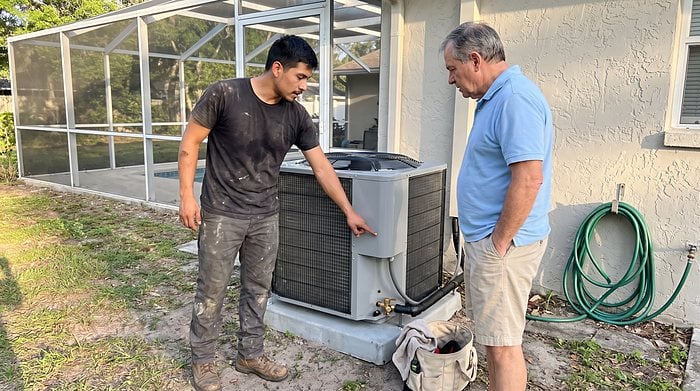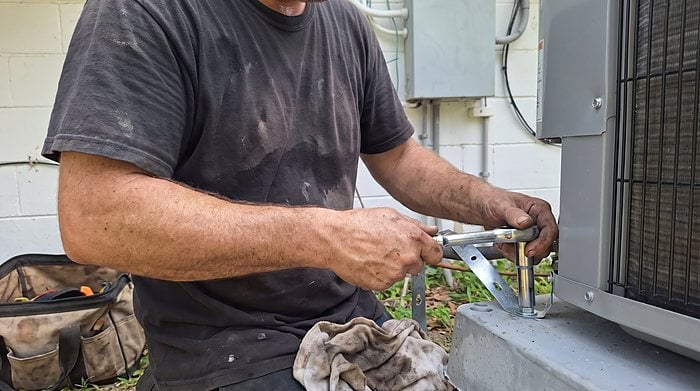
Replacing an air conditioner in Orange County is more than removing the old equipment and connecting a new one. A permanently installed AC replacement generally requires a mechanical permit, even when the new system is the same size and type as the old equipment. The permit documents the project and allows the completed installation to be inspected.
The important question for homeowners is not simply whether a permit is required, but which permit applies, who should pull it, which jurisdiction handles it, and what happens after the installation. Understanding those details before signing an AC replacement proposal can help you avoid unexpected problems later.
Does Replacing an AC Require a Mechanical Permit?
Yes. Orange County requires a mechanical permit for permanently installed air-conditioning and heating equipment. That includes replacing an existing central AC or heat pump, even when the replacement is considered a like-for-like changeout.
The permit requirement can also apply to related mechanical work performed as part of the project:
| Project | Mechanical Permit? |
|---|---|
| Replace a permanently installed AC | Yes |
| Install a new AC or heat pump | Yes |
| Alter an existing mechanical system | Yes |
| Replace or modify ductwork | Yes |
| Install applicable exhaust equipment | Yes |
| Portable or plug-in AC unit | Generally no |
The reason a like-for-like replacement still needs permitting is that the new installation must meet the requirements in effect when the work is performed. HVAC standards, efficiency requirements, refrigerant technology, condensate protection, and other installation requirements have changed since many existing systems were installed.
So, replacing a 10- or 15-year-old AC is not simply a matter of putting a new condenser where the old one stood. The installation needs to be evaluated under the requirements applicable to today's equipment.
Could an AC Replacement Need an Electrical Permit?
Sometimes. The mechanical permit covers the HVAC portion of the project, but electrical modifications may require their own permitting. This can become relevant if the replacement changes circuit requirements, wiring, disconnects, breakers, or other electrical components.
A higher-capacity system, different equipment configuration, or heat pump replacement can change the electrical requirements. Before work begins, ask whether the proposed replacement requires any electrical modifications and whether those changes are included in the contractor's scope.
A complete AC replacement proposal should make this clear rather than simply listing a generic "permit" charge. If electrical work is necessary, it should be identified and explained before installation day.
Does Orange County or Orlando Issue My AC Permit?
This depends on your property's actual jurisdiction, not simply the city name or ZIP code used in your mailing address. A home can have an Orlando mailing address without being located inside the City of Orlando, which means the permitting authority may be different.
For an AC replacement, the contractor should first verify the property address and determine which jurisdiction handles the permit.
- Unincorporated Orange County: Orange County Division of Building Safety
- City of Orlando: City of Orlando Building Division
- City of Edgewood: Additional city approval may apply
- Ranger Drainage District: Additional district requirements may apply
Orange County uses its Fast Track online permitting system, while the City of Orlando operates its own permitting process. A contractor who regularly works throughout Central Florida should confirm the jurisdiction before submitting the application rather than assuming the correct authority from the ZIP code.
What Information Goes on an AC Permit?
An AC permit application records more than the fact that an air conditioner is being replaced. It identifies the property, type of work, project value, and important information about the proposed HVAC equipment.
For a typical replacement, the application can include:
- New or existing construction
- Alteration, addition, repair, or replacement
- Property type and building classification
- Equipment value, labor, and materials
- System tonnage and BTU capacity
- Kilowatt information where applicable
- Number of HVAC units
- Whether ductwork is involved
- Related building permit information when applicable
The equipment capacity is particularly important because the proposed system size becomes part of the permit documentation. Your contractor should therefore be able to tell you exactly what equipment is being installed before the application is submitted.
If a HVAC contractor cannot clearly explain the proposed system's capacity, model, and installation scope, that is something to resolve before approving the replacement.
What Types of Permits Are Required for AC Replacement in Orange County?
A standard AC replacement in Orange County primarily falls under mechanical permitting, but the exact permit requirements depend on what is being changed during the installation. A straightforward equipment replacement may involve fewer approvals than a project that also changes electrical components, ductwork, or other parts of the home's systems.
For a typical residential AC replacement, the project may involve:
- Mechanical Permit: Covers the installation or replacement of the HVAC equipment itself.
- Electrical Permit: May be required when the replacement involves new or modified electrical circuits, wiring, disconnects, or other electrical work.
- Ductwork Permit: May apply when the project includes significant duct installation or modification rather than simply connecting the new equipment to existing ducts.
- Building Permit: May become relevant when the AC project involves associated structural or building modifications.
The key is that not every AC replacement requires every permit listed above. A like-for-like equipment change may primarily involve mechanical permitting, while a project that changes the electrical service, modifies ductwork, or requires building alterations can have additional permitting requirements.
Your contractor should review the scope before installation and tell you which permits apply to your specific property and project. That is much more useful than assuming every AC replacement follows exactly the same permitting process.
What Happens After the AC Permit Is Issued?
The permit is followed by an inspection process. Once the installation is completed, the applicable inspection allows the permitting authority to review the finished work for compliance with the relevant requirements.
The inspection can address items such as:
- Equipment installation and clearances
- Electrical work
- Condensate drainage and protection
- Equipment placement
- Applicable mechanical requirements
- Other components covered by the installation
The inspector does not replace the contractor's responsibility for doing quality work, but the inspection provides an independent review of the completed installation. If something needs correction, the contractor can address it before the project receives final approval.
After scheduling your replacement, ask the AC contractor for the permit number and the expected inspection schedule. Those are reasonable questions for any homeowner paying for a permitted AC installation.
What Happens If an AC Is Replaced Without a Permit?
Skipping a required permit may seem like a way to save time or money, but it can create problems later. An unpermitted replacement may become an issue during a home sale, appraisal, inspection, insurance claim, or future HVAC work.
Potential concerns include:
- Difficulty documenting when and how the system was installed
- Questions during a future property sale
- Requirements for retroactive permitting
- Additional inspection or correction work
- Potential penalties for unpermitted work
- Questions surrounding warranty or insurance documentation
The problem may not appear immediately. A homeowner could live with an unpermitted installation for years and only discover the issue when selling the property. That is why the permit should be treated as part of the AC replacement process rather than an unnecessary administrative expense.
Why Does Permitted AC Work Matter to Homeowners?
The value of permitting is not simply the piece of paper or the permit fee. It creates documentation for the project and provides an inspection process that would not exist with completely unpermitted work.
| Factor | Permitted Replacement | Unpermitted Replacement |
|---|---|---|
| Code review | Subject to applicable inspection | No normal permit inspection |
| Project record | Permit record exists | Limited official documentation |
| Future resale | Easier to document the work | May raise questions |
| Installation accountability | Licensed contractor identified | Greater homeowner exposure |
| Inspection | Included in permitting process | Not part of the unpermitted project |
For homeowners, the biggest difference is accountability. You are not simply relying on a contractor's statement that the replacement was completed correctly. The project is documented and subject to the applicable inspection process.
FAQs
Do I Always Need a Mechanical Permit to Replace an AC in Orange County?
A typical permanent AC replacement requires mechanical permitting, even when the new equipment replaces an existing system. The exact requirements can depend on the scope of work and the property's jurisdiction.
Is an Electrical Permit Needed for an AC Replacement?
Not necessarily. An electrical permit may be required if the replacement involves new or modified wiring, circuits, disconnects, breakers, or other electrical components. Your contractor should identify this before work begins.
Does Changing the Ductwork Require a Separate Permit?
It can. If the AC replacement includes significant duct installation or modification, additional permitting requirements may apply. Minor connections associated with the equipment replacement may be handled differently.
Does an AC Replacement Ever Require a Building Permit?
A standard equipment replacement does not necessarily require a separate building permit. However, if the project involves structural or other building modifications, additional approvals may be required.
Who Determines Which Permits My AC Replacement Needs?
The required permits depend on the property, project scope, and applicable jurisdiction. A qualified HVAC contractor should review the installation beforehand and identify the permits needed rather than leaving the homeowner to determine them after work begins.
Why Choose Jormechanical Air for AC Replacement in Orlando?
A properly managed AC replacement should include more than delivering equipment and connecting it. The contractor should understand the permitting requirements for your property, identify the correct jurisdiction, handle the appropriate paperwork, and coordinate the installation and inspection process.
Jormechanical Air pulls the mechanical permit under Florida license CAC1821345 and builds each system to the code your county or city enforces. To us, a job isn't finished until it passes inspection.
Before scheduling an AC installation and replacement, ask three questions: Which permits does my project require? Which authority handles the permit for my address? Who will be listed as the applicant? A professional contractor should be comfortable answering all three.
If you are dealing with an existing system that needs repair rather than complete replacement, the permitting requirements may be different. For AC repair, ask whether the specific repair requires a permit before approving the work.