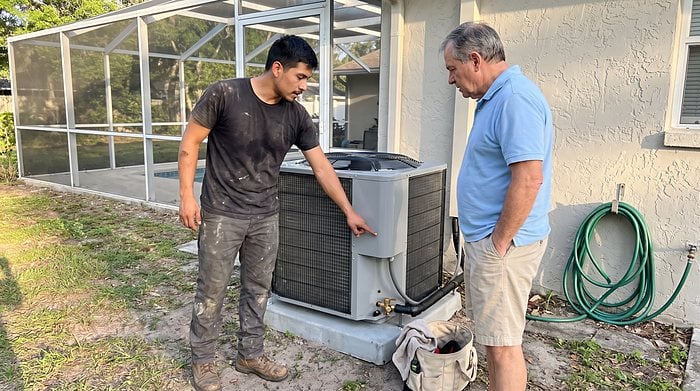
Your air conditioner made it through another Florida summer, but that does not necessarily mean it is ready for the next one. A system can keep the house comfortable while gradually losing efficiency, developing electrical wear, accumulating coil buildup, or operating with a refrigerant problem that has not yet caused a complete failure.
That distinction matters after a demanding Orlando summer. The 2026 season brought 58 days at 95°F or higher, compared with about 22 in a typical year. Your AC had to reject heat for longer periods while compressors, capacitors, contactors, blowers, coils, and condensate components continued working through Florida's heat and humidity.
The useful question now is not simply, "Did my AC break?" It is "What condition is my AC in after that workload, and does it have enough reliability left for another summer?"
What Did This Florida Summer Ask of Your AC?
A normal cooling season already puts significant operating hours on an Orlando air conditioner. A summer with substantially more extreme-heat days adds another layer of demand because the outdoor condenser has to reject heat when outdoor temperatures are already very high.
During those periods, the compressor and electrical components can operate under greater thermal stress, while a dirty condenser coil, restricted airflow, or incorrect refrigerant charge can make the system work even harder. Surviving those conditions is encouraging, but it does not tell you whether a component has been weakened.
For context, the 2026 figures in the draft show how unusual the season was:
| Measure | 2026 | Typical Year |
|---|---|---|
| Days at 90°F or higher | 122 by mid-September | 117 for the full year |
| Days at 95°F or higher | 58 | 22 |
| Average summer temperature | 84.4°F | Second-highest on record |
The 58 days at 95°F or higher are particularly relevant because extreme outdoor temperatures make heat rejection more demanding. A system with marginal airflow, a weak capacitor, a dirty condenser coil, or a refrigerant problem may still cool the home, but it can have considerably less operating margin.
That is why the end of summer is a useful point to evaluate the equipment. You have just put it through its heaviest workload, so the system's current condition provides more useful information than simply looking at its age.
Which AC Problems Can Show Up After a Hard Summer?
Not every post-summer problem announces itself with a complete breakdown. Some of the most useful warning signs are changes in how the system starts, runs, sounds, or maintains the indoor temperature.
A homeowner who knows what changed during the summer can give an HVAC technician much better information during an inspection. Pay attention to symptoms that were not present at the beginning of the season or that became noticeably worse as temperatures climbed.
The System Takes Longer to Cool
If your home used to reach the thermostat setting comfortably but now takes significantly longer, the change deserves attention. Airflow restrictions, coil condition, refrigerant issues, duct leakage, or declining equipment performance can all contribute.
The AC Runs Almost Continuously
Long runtimes are normal during very hot afternoons, but a system that runs continuously and still cannot maintain the thermostat setting may be operating with reduced capacity. Compare this with how the system performed during previous summers rather than judging one exceptionally hot afternoon.
The Outdoor Unit Sounds Different
New buzzing, grinding, rattling, clicking, or unusually loud compressor operation should not simply be attributed to the heat. Changes in sound can point toward electrical, mechanical, or airflow-related problems that are easier to investigate before they become a no-cooling emergency.
The Breaker Trips Repeatedly
A breaker that trips once deserves attention; one that repeatedly trips should not simply be reset. Capacitors, compressors, wiring, and other electrical components can all contribute to excessive current or startup problems.
The System Needed Refrigerant
An AC system should not routinely need refrigerant added. If your system was topped off during the summer, the important question is why the charge was low. A proper diagnosis should look for the leak instead of treating another refrigerant addition as the permanent solution.
These symptoms do not automatically mean your AC needs replacement. They mean there is enough evidence to investigate the system before another long cooling season puts the same components under stress.
Which AC Components Took the Most Pressure?
A Florida AC does not wear evenly. Some components experience much more heat, cycling, moisture, or mechanical stress than others, which is why a useful post-summer inspection should look beyond whether the system still produces cold air.
Compressor and Starting Components
The compressor carries the central mechanical load of the cooling system. A weak capacitor or electrical connection can make starting more difficult and increase stress on the compressor.
Capacitors and Contactors
Capacitors can deteriorate under sustained heat, while contactor contacts experience wear every time the outdoor unit cycles. These components can look relatively ordinary while their electrical performance has already changed.
Condenser Coil
The outdoor coil has to release heat into Florida's already-hot outdoor air. Grass clippings, pollen, dust, and debris between the fins restrict heat transfer and can force the system to work harder.
Evaporator Coil
The indoor coil operates in a humid environment and can accumulate dust and biological buildup when filtration or airflow is inadequate. Restriction at the evaporator can reduce airflow and contribute to coil-freezing problems.
Condensate Drain
Cooling removes moisture from indoor air, which means the AC produces condensate throughout the season. Months of operation can leave biological buildup inside the drain line and increase the chance of a blockage.
The important point is that none of these components should be judged by appearance alone. A capacitor should be tested against its rated microfarads, airflow should be measured, and refrigerant performance should be evaluated using appropriate operating measurements.
How Can You Tell If the AC Is Still Performing Correctly?
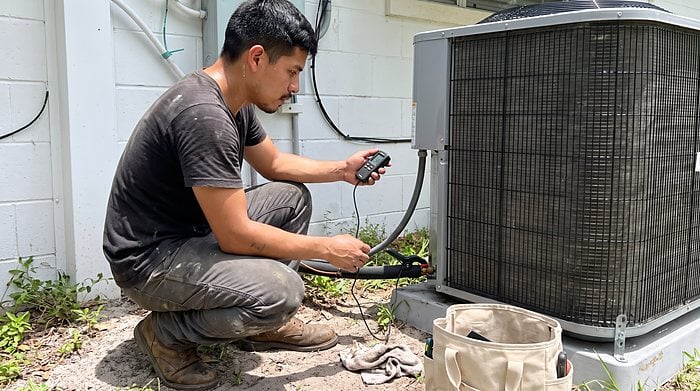
A homeowner can notice symptoms, but measurements give a technician a much clearer picture of the system's condition. A meaningful post-summer inspection should establish whether the equipment is actually performing within expected operating parameters.
Four measurements are particularly useful because they turn a general statement such as "everything looks good" into information that can be compared with future service visits.
- Temperature split: Comparing return-air and supply-air temperatures helps identify changes in cooling performance and can point toward airflow or refrigerant concerns.
- Superheat or subcooling: Depending on the system's metering device, these measurements help evaluate refrigerant performance rather than relying on pressure alone.
- Capacitor microfarads: Testing the capacitor against its rated value can identify deterioration before the component completely fails.
- Total external static pressure: This measures how hard the blower is working against the duct system and can reveal restrictions that equipment replacement would not solve.
Ask for the relevant readings to be explained rather than accepting only a verbal "everything looks fine." A documented baseline can become useful when the system is checked again next season.
Could Your Ductwork Be the Reason the AC Is Struggling?
The outdoor equipment may be healthy while the home's duct system quietly makes the AC work harder. This is particularly important in Florida homes where portions of the ductwork may pass through hot attics.
A leaking supply duct can release conditioned air into an attic instead of delivering it to the room. A leaking return can pull hot, humid attic air into the system. Both situations increase the cooling load and can make the equipment run longer without necessarily producing an obvious equipment fault.
Restricted airflow creates another problem. A dirty filter, crushed flex duct, undersized return, closed registers, or other restriction increases the resistance the blower has to overcome.
If certain rooms consistently struggled this summer, do not automatically assume the AC is too small. Consider whether the problem could be related to:
- Leaking supply or return ducts
- Restricted return-air pathways
- Crushed or poorly supported flex duct
- Excessively restrictive filters
- Closed or obstructed registers
- High total external static pressure
A ductwork evaluation can help determine whether the distribution system is contributing to the problem before you spend money on equipment replacement.
Should You Repair the AC or Start Planning Replacement?
Getting through one summer does not automatically justify replacement, just as an older system does not automatically deserve another season. The better decision comes from combining age, operating behavior, repair history, refrigerant history, efficiency, and the condition of the major components.
Use the following comparison as a starting point rather than a replacement rule:
| Factor | Signs Another Season May Be Reasonable | Signs Replacement Planning Makes Sense |
|---|---|---|
| Age and use | Well-maintained and performing normally | Older system with heavy accumulated runtime |
| Cooling | Holds the setpoint during hot weather | Frequently runs continuously without catching up |
| Repairs | Occasional isolated repairs | Recurring failures or increasingly expensive repairs |
| Refrigerant | Charge remains stable | Repeated refrigerant additions or confirmed leaks |
| Electrical | Components test within specifications | Repeated electrical failures or major component concerns |
| Coils and cabinet | Cleanable and structurally sound | Significant corrosion, leakage, or deterioration |
| Ductwork | Airflow is balanced | Persistent leakage or restriction |
Two warning signs do not automatically mean the system should be replaced tomorrow. They do mean it is worth planning rather than waiting until the next extreme-heat week leaves you with no time to compare options.
Conversely, a well-maintained system that held temperature, maintained stable operation, and has no significant repair history may have plenty of useful life remaining. The goal is to make the decision from evidence rather than from age alone.
Why Check Your AC Before Next Summer?
The worst time to discover a weak capacitor, refrigerant leak, restricted airflow, or failing electrical component is during the first stretch of extreme heat when the system is running almost continuously. A post-summer inspection gives you time to investigate problems while the equipment is still operational.
It also gives you more choices. If a repair is appropriate, it can often be handled before the next cooling season. If replacement is eventually justified, you have time to compare equipment, installation proposals, and financing rather than making the decision during an emergency.
Most importantly, the inspection does not have to end with a recommendation to replace the system. If the equipment is performing properly, a professional should be able to tell you that too.
FAQs
Does surviving a Florida summer mean my AC is ready for next year?
Not necessarily. A system can continue cooling while developing electrical wear, airflow restrictions, refrigerant problems, or component deterioration. A post-summer inspection can identify those issues before the next prolonged period of extreme heat.
How often should an Orlando AC receive maintenance?
There is no single interval that fits every system. Florida equipment generally experiences long cooling seasons, so maintenance timing should consider operating hours, equipment age, repair history, indoor air quality, and manufacturer recommendations.
Should I have my refrigerant checked after summer?
If the system needed refrigerant during the summer, yes. A low charge generally indicates a leak or another underlying issue. The useful repair is identifying the cause rather than repeatedly adding refrigerant without addressing why the charge was lost.
Can a dirty coil cause my AC to work harder?
Yes. Dirt and debris can interfere with heat transfer and airflow. A dirty condenser coil has more difficulty rejecting heat, while a restricted evaporator coil can reduce airflow and contribute to poor cooling performance.
Should I replace my AC if it is more than 10 years old?
Age alone does not determine whether replacement is appropriate. Consider the system's current performance, accumulated repairs, refrigerant history, efficiency, component condition, and whether it can reliably meet the home's cooling needs.
Why Orlando Homeowners Choose Jormechanical Air
Making it through a Florida summer is a good sign, but it does not tell you how much operating life your AC has left. Jormechanical Air can evaluate the system based on its actual condition, including cooling performance, electrical components, airflow, refrigerant operation, and the problems that showed up during the summer.
Jormechanical Air checks the parts this summer pushed hardest, from the capacitor and contactor to the coils and drain line, and tells you plainly what's healthy and what's wearing. Our HVAC technicians hold EPA 608 certification, and every repair carries a 90-day warranty on the work.
If your system performed normally all summer, a professional AC maintenance service can help establish a baseline before the next cooling season. If you noticed weak cooling, unusual noises, refrigerant issues, electrical problems, or repeated breakdowns, AC repair service can identify the underlying problem before it becomes a midsummer emergency.