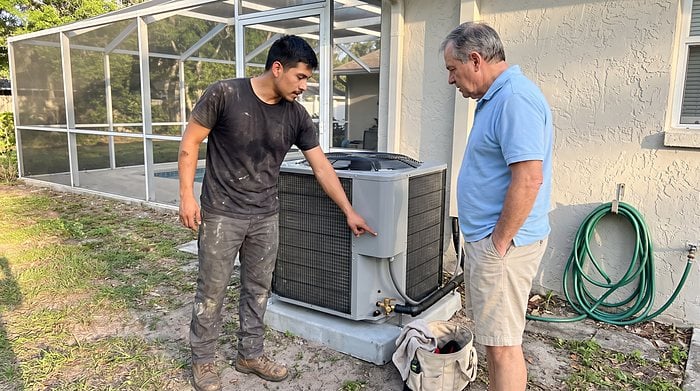
Snowbirds back in Central Florida should check five things before running the air conditioner hard. Look at the thermostat and breakers, the indoor unit, the filter, the drain line and the outdoor unit. Then check indoor humidity. It shows how well the system kept the house dry.
At Jormechanical Air in Orlando, our tune-up checklist covers most of the same spots. Check them yourself first, and you'll know if the system came through summer fine or needs a technician.
Empty Houses Still Work the Air Conditioner

A closed Florida house is not resting. Most snowbirds leave the system running at around the 80 degrees FPL suggests for non-programmable thermostats. It cycles through the hottest and wettest months with nobody watching, and that is when small problems grow.
The condensate drain is the main concern. Every hour of cooling pulls water out of the air, and that water runs through a small pipe where algae and sludge build up. With nobody home to notice a slow drain, a clog can back water into the pan.
The outdoor unit takes its own beating. Summer storms push leaves against the coil, grass grows around the pad, and wasps, lizards and ants move into a quiet cabinet. Afternoon thunderstorms also bring power outages and surges while many seasonal homes sit empty.
Why Is Humidity the First Number to Check?
Temperature tells you whether the system is cooling, but humidity tells you whether it protected the house. The EPA recommends keeping indoor humidity below 60%, ideally between 30% and 50%, to keep mold from growing. An inexpensive digital hygrometer gives you that reading within minutes of walking in.
A reading above 60% means something went wrong while you were away. The system may have shut down on a clogged drain, the thermostat may have lost power, or the setting was too high to dry the air. Check for musty smells, damp closets and spots on ceilings or walls.
A good reading still deserves a second look after you settle in. Cooking, showers and open doors add moisture fast. If the house stays clammy for several days at normal settings, have the system checked.
Five Return-Day Checks for Your Air Conditioner

Most return-day checks take less than an hour and need nothing beyond a flashlight and some white vinegar. Work through these five in order before you set the thermostat to your normal comfort level, and stop to call for service if anything looks wrong.
Start at the Thermostat and Breakers
Confirm the display is on, the mode reads Cool and the batteries are fresh. Check that the breakers for the outdoor unit and air handler have not tripped. A blank thermostat after a stormy summer often points to a power issue, not a dead system.
Look for Water at the Indoor Unit
Open the closet, garage or attic space where the air handler sits. Water in the pan, rust stains, a wet floor or a musty odor means the drain may have backed up. Leave cooling off until the water is cleaned up and the drain runs clear.
Swap the Air Filter
Replace the filter even if it looks clean. A filter that sat in a humid house for months can hold dust and moisture, and a restricted filter cuts airflow, which can freeze the indoor coil. Note the size printed on the frame so you can stock spares for the season.
Flush the Condensate Drain Line
Find the drain line's cleanout near the air handler and pour in about a cup of white vinegar. Then check that water drips freely where the line exits outside. A dry outlet after the system has run for an hour means the line still needs clearing.
Clear Around the Outdoor Unit
Walk around the condenser, the outdoor half of the system. Clear leaves, grass clippings and vines a couple of feet back, and look through the grille for nests, wasps or debris. Check that the unit sits level on its pad and that the insulation on the copper lines is intact.
One hour of looking catches most of the surprises that greet returning snowbirds. If all five checks pass, the system likely came through summer in good shape.
Cool the House Down in Steps
After a long drive south, it is tempting to drop the thermostat to 68 and let the system run flat out. It feels like the fastest way to make a stuffy house comfortable again, and a healthy system can handle a long cooling run without trouble.
A hidden fault changes that. If the drain is clogged or the filter is packed, a hard run pushes more water into a blocked line, and it ends up in the pan, the closet or the ceiling below. A weak capacitor can also fail under that first long cycle.
Do the checks first, then lower the setting a few degrees at a time over the first afternoon. Listen for new noises, look at the closet floor and feel for cool air at the registers. If anything sounds or looks wrong, shut the system off and call for service.
When a Return-Day Problem Needs a Technician
Some problems are simple fixes. Others need a licensed technician, and this table shows where that line falls.
| What you notice | What it may mean | What to do |
|---|---|---|
| Water around the indoor unit | A clogged drain or an overflowing pan | Turn off cooling and book a visit |
| A breaker that trips again and again | An electrical fault | Leave it off and call a technician |
| Ice on the copper lines or indoor coil | Poor airflow or low refrigerant | Turn off cooling and book a diagnosis |
| An outdoor fan that won't spin | A bad fan motor or wiring | Have the unit checked |
| A musty smell that won't clear | Moisture or mold near the coil or drain | Have the drain and coil checked |
| Humidity that stays above 60% | The system isn't drying the air enough | Have the system tested |
Leave refrigerant, wiring and the compressor to a technician. Only technicians with EPA Section 608 certification may legally work on refrigerant. Capacitors can also hold a charge with the power off. Book air conditioning repair early, and a small fault stays small.
Should You Book a Tune-Up After Returning?

If every check passes, you may not need a service call right away. Still, a system that ran unattended through a Florida summer logged heavy hours. A fall tune-up finds worn parts while you are home to deal with them.
Book a visit sooner if any of these apply, because each one points to wear that a homeowner check cannot measure.
- The system is 10 or more years old and ran long hours all summer.
- You found water at the indoor unit, so the drain and pan need cleaning.
- The house smelled musty, which means the coil needs a look.
- Your summer bills jumped, a sign the system ran longer than it should.
If the tune-up turns up a worn-out system, our post on whether your air conditioner will make it through another Florida summer helps you weigh repair against replacement. Make that call in fall, while you are still home to oversee the work.
Air Conditioning Maintenance and Repair for Snowbirds
A cool, dry house starts with these five checks and one fall visit. Our air conditioning maintenance visit flushes the drain line, the part a closed house works hardest. You also get a list of everything we checked.
We're locally owned in Orlando and have held Florida license CAC1821345 since February 2022. We cover seven Central Florida counties. That includes Lake, Volusia and Osceola, where many seasonal homes sit empty all summer.
If something broke over the summer, you'll see the repair price before we start. Every repair carries our 90-day repair warranty. We hold an A+ rating with the BBB and book return visits Monday through Saturday. Call us to set up yours.
Frequently Asked Questions
Should I cover the outdoor unit while I'm away?
No. A cover or tarp does nothing useful in a Florida summer, and it can trap moisture against the coil. Use the time before you leave to make sure the unit is strapped down. The Florida Mechanical Code calls for those tie-downs so outdoor units hold steady in storm winds.
Do I need a dehumidifier in a seasonal home?
Only if the house stays damp with the system running normally. A whole-home dehumidifier ties into the air handler and holds the humidity you set, even on mild, rainy days when cooling barely runs. We install them, and one visit shows whether your home needs one.
Can I check my home's humidity from up north?
Yes. Many smart Wi-Fi thermostats show indoor temperature and humidity on your phone, and some send an alert when either one climbs. That gives you time to have someone look at the house before a slow drain turns into water damage. Jormechanical Air installs them and checks your wiring first.
Should I book a tune-up before I leave for the summer?
Yes, and that spring visit matters most. Once you head north, the system runs for months through the hottest, most humid weather with nobody home to notice a problem. Ask us about a twice-a-year schedule, with one visit before you leave and one after you return in the fall.
What if the float switch shut my system off?
A float switch is a small safety cutoff in the drain pan or line. When water backs up, it stops cooling before the pan overflows. Clear the drain and empty the pan, then try the system again. If the switch trips a second time, book a visit.