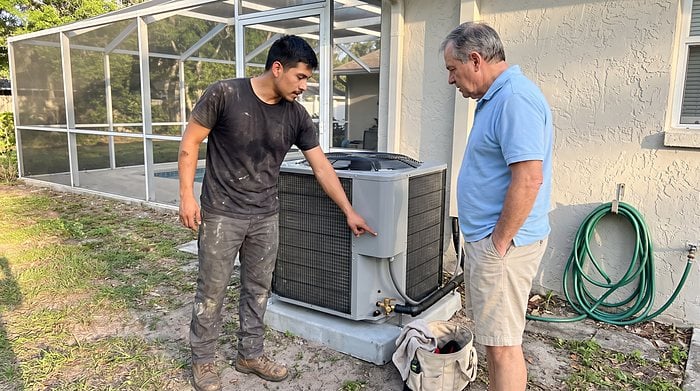
If your Orlando home takes hours to cool down on a July afternoon, or certain rooms never feel comfortable even when the air conditioning runs constantly, your air conditioner may be the wrong size for your home's cooling needs. Choosing the right capacity matters in Central Florida, where summer temperatures regularly reach the low 90s and outdoor humidity adds another challenge to indoor comfort.
The right air conditioner size depends on your home's cooling load, not just its square footage. Two Orlando homes with the same floor area can require different equipment because of their insulation, windows, ceiling height, ductwork, sun exposure, and air leakage. An oversized system may cool the thermostat area quickly but leave excess moisture indoors, while an undersized system may struggle during the hottest afternoons.
Before replacing your air conditioner, understand how contractors calculate cooling capacity, what local conditions affect the decision, and which questions to ask before approving an installation.
What Size Air Conditioner Does a Typical Orlando Home Need?

Air conditioner capacity is measured in tons, with one ton equal to 12,000 BTUs per hour of cooling. While your home's square footage provides a useful starting point, the right size also depends on insulation, window exposure, ceiling height, ductwork, and Orlando's hot, humid climate.
The table below offers a general reference for estimating air conditioner size by square footage. Actual requirements can vary significantly between homes of the same size.
| Home Size | Rough Air Conditioner Size |
|---|---|
| 1,000 sq. ft. | 1.5–2 tons |
| 1,200 sq. ft. | 2–2.5 tons |
| 1,500 sq. ft. | 2.5–3 tons |
| 1,800 sq. ft. | 3–3.5 tons |
| 2,000 sq. ft. | 3–3.5 tons |
| 2,500 sq. ft. | 3.5–4.5 tons |
| 3,000 sq. ft. | 4–5 tons |
These ranges are illustrative and should not be used to select equipment without a professional load calculation. For example, a well-insulated 2,000-square-foot Orlando home with shaded windows may need a different capacity than a similar-sized home with a hot attic, older windows, or significant air leakage.
A qualified HVAC contractor should calculate your home's cooling load before recommending a unit. If you're planning a replacement, ask for that calculation before you compare quotes.
Why Does Central Florida's Climate Matter When Sizing an Air Conditioner?
An air conditioner in Orlando needs to do more than lower your home's temperature. It must also manage the moisture that comes with Central Florida's humid climate. During summer, temperatures can climb into the 90s while outdoor humidity remains high. If your air conditioner is incorrectly sized, your home may feel damp and uncomfortable even when the thermostat reaches its target temperature.
Proper sizing balances cooling capacity with humidity control. A system that's too large may cool the house quickly and shut off before removing enough moisture. A system that's too small may struggle to keep up during the hottest afternoons. Both situations can affect comfort and energy use. When sizing an air conditioner for a Central Florida home, a contractor should consider these four local factors.
- High outdoor humidity. Moisture entering through doors, windows, and air leaks increases the demand for dehumidification.
- Intense afternoon sunshine. West-facing windows and sun-exposed rooms can gain heat rapidly.
- Hot attics. Inadequate ceiling insulation can allow attic heat to increase indoor cooling demand.
- Extended cooling season. Orlando homes often need air conditioning for much of the year, making correct sizing and installation important.
These conditions explain why square footage alone cannot determine the right air conditioner size. A professional load calculation helps establish how much cooling your home needs while accounting for Orlando's heat, humidity, and your property's specific characteristics.
What Is a Manual J Load Calculation, and Why Does It Matter?

A Manual J load calculation is a detailed method used to estimate how much heating and cooling a house requires under design conditions. It evaluates the home itself rather than selecting equipment based only on its size or the capacity of the old unit.
In Florida, the state's building-code guidance explains that air conditioner sizing depends on factors such as window quantity, efficiency, orientation, insulation, and other conditions. For residential replacements, applicable code requirements address sizing calculations and duct inspection.
During the assessment, an HVAC contractor may evaluate these details.
- The home's total square footage and room dimensions.
- Ceiling heights and the number of stories.
- Wall, ceiling, and attic insulation.
- Window sizes, glazing, shading, and orientation.
- Air leakage and ventilation.
- Occupancy and heat-producing appliances.
- Duct layout, leakage, and airflow.
- Local outdoor design conditions and indoor comfort targets.
The result helps determine the home's cooling load. The contractor then uses appropriate equipment-selection procedures to choose a system capable of meeting that load.
A proper calculation is especially valuable if you've remodeled, added insulation, replaced windows, enclosed a porch, or converted a garage into living space. These changes may alter the home's cooling needs, meaning the old equipment size may no longer be appropriate.
Is a Bigger Air Conditioner Better for an Orlando Home?
No. An oversized air conditioner can create comfort and humidity problems even when it appears to cool the house quickly. When the system cools the thermostat area too fast, it may shut off before running long enough to remove sufficient moisture from the indoor air.
Short cycling can also increase the frequency of startup cycles and contribute to unnecessary energy use and equipment wear. Meanwhile, some rooms may remain uncomfortable because the actual problem involves duct design, airflow, insulation, or the home's layout rather than insufficient capacity.
An undersized unit creates a different set of challenges. During the hottest Orlando afternoons, it may run for extended periods without reaching the thermostat setting. That can indicate insufficient capacity, but it can also result from dirty coils, refrigerant problems, restricted airflow, or leaking ducts.
Here's how the two situations may compare.
| Issue | Oversized System | Undersized System |
|---|---|---|
| Cooling cycles | May turn on and off too frequently | May run for long periods |
| Humidity control | May struggle because of short cycles | May struggle if it cannot meet the total load |
| Energy use | Can increase with inefficient cycling | Can rise when the system runs excessively |
| Comfort | Cool air but lingering humidity may occur | Indoor temperatures may remain too high |
| Best next step | Verify sizing and system operation | Check cooling load, equipment condition, and airflow |
Neither symptom proves the equipment size is wrong. A professional diagnosis should separate sizing problems from issues an air conditioning maintenance visit would fix before you invest in a replacement.
How Do Insulation, Windows, and Ductwork Affect Cooling Capacity?
Your home's building envelope and air distribution system directly affect how much cooling the equipment must provide. Two houses with identical floor plans may need different cooling capacities because one retains conditioned air more effectively.
Insulation and Attic Conditions
Insulation slows heat transfer through ceilings and walls. In Orlando, a poorly insulated attic can allow substantial heat to move into the living space during summer. Improving insulation and sealing air leaks may reduce the home's cooling load, although the actual benefit depends on existing conditions.
Windows and Direct Sunlight
Large windows can introduce significant solar heat, particularly when they face west and receive strong afternoon sun. Window efficiency, shading, blinds, and nearby trees all influence the amount of heat entering the home.
For instance, a living room with large west-facing windows in Winter Park may behave differently from a similarly sized room shaded by mature trees in another Orlando neighborhood.
Ductwork and Airflow
Leaky, disconnected, or poorly insulated ducts can waste cooled air before it reaches living spaces. Restricted airflow can also affect how effectively the system transfers heat and removes moisture.
Before adding cooling capacity to fix a hot bedroom or upstairs area, have the ductwork and airflow checked. A diagnostic visit from an air conditioning repair technician can show whether the issue involves the equipment, its ducts, or the home's heat gain.
Should You Replace Your Air Conditioner With the Same Size?
Not automatically. Matching the existing unit's capacity can be reasonable when the home and its cooling requirements haven't changed, but the old system may have been incorrectly sized in the first place. An older air conditioner might also have been selected before improvements were made to the home's windows, insulation, or ductwork. Conversely, an addition or major renovation could have increased the cooling load.
Before approving a like-for-like replacement, ask the HVAC contractor to explain these five points.
- Whether a new load calculation is necessary.
- Whether the old system adequately cooled and dehumidified the home.
- Whether the existing ductwork can support the proposed equipment.
- Whether the indoor and outdoor components are properly matched.
- Whether the selected system can meet the home's humidity-control needs.
Florida's energy-code guidance emphasizes equipment sizing and duct inspection for residential air conditioner replacements. The goal is not simply to install a unit with the same tonnage, but to choose equipment that fits the home's current requirements.
What Should You Ask an HVAC Contractor Before Choosing a Size?

The HVAC contractor's evaluation is just as important as the equipment brand. A properly sized system can still underperform if it is installed incorrectly, paired with unsuitable components, or connected to ductwork that cannot deliver the required airflow.
Before approving an estimate, ask these six questions.
- Did they run a load calculation? Ask how the contractor determined your home's required cooling capacity.
- How will humidity be controlled? Discuss equipment selection and expected moisture removal for Central Florida conditions.
- Was the ductwork inspected? Confirm that leaks, restrictions, and insulation problems have been considered.
- Are the components compatible? The indoor and outdoor equipment should be selected as a suitable combination.
- Will the installation be tested? Ask about airflow verification, system commissioning, and the operational checks done on install day.
- What does the estimate include? Clarify electrical work, the replacement permit where required, condensate drainage, and necessary modifications.
Compare estimates based on the quality of the assessment and the work included, not just the proposed tonnage or the lowest upfront price. For installation planning, Jormechanical Air provides residential and commercial air conditioning installation and repair in Orlando and surrounding communities.
Why Choose Jormechanical Air in Orlando, FL?
Choosing the right air conditioner for your Orlando home means balancing cooling capacity, energy efficiency, and humidity control. Our team helps homeowners evaluate their cooling needs, existing ductwork, and home layout to make informed decisions about air conditioner replacement and installation.
At Jormechanical Air, we serve residential and commercial customers throughout Orlando and surrounding Central Florida communities. We hold Florida HVAC contractor license CAC1821345, are EPA 608 certified, and maintain BBB A+ accreditation. Whether you're replacing an aging unit or installing a new system, we can help you explore suitable options for your property.
If you're planning an upgrade, our air conditioning installation team prices each option in full, and Wisetack financing, subject to credit approval, can help with installation costs. We recommend starting with a professional assessment rather than choosing an air conditioner size based on square footage alone. Call (407) 640-3422 to discuss your home's cooling needs and take the next step toward reliable indoor comfort.
Frequently Asked Questions
How many tons of air conditioning does a 2,000-square-foot Orlando home need?
There is no universal tonnage for every 2,000-square-foot home. The correct capacity depends on insulation, windows, ceiling height, air leakage, ductwork, and indoor moisture load. A contractor should perform a load calculation before recommending a specific size.
Can an oversized air conditioner make my Orlando home feel humid?
Yes. An oversized system may cool the thermostat area quickly and shut off before removing enough moisture. However, high indoor humidity can also result from air leaks, drainage problems, ventilation, or equipment issues, so the cause should be investigated.
Does a new air conditioner need to be the same size as my old one?
Not necessarily. The old unit may have been oversized or undersized, and improvements or renovations may have changed the home's cooling requirements. Have the current load and ductwork evaluated before selecting replacement equipment.
Does air conditioner sizing affect my electric bill?
Yes, it can. An incorrectly sized or poorly installed system may operate inefficiently, cycle too frequently, or run for extended periods without achieving the desired comfort. Equipment efficiency, thermostat settings, maintenance, and duct condition also influence energy consumption.
When should I consider replacing my air conditioner?
Consider an evaluation if your system struggles to maintain temperatures, has recurring repair needs, or no longer controls humidity adequately. These symptoms don't automatically mean replacement is necessary, but an HVAC professional can assess whether it will make it through another Florida summer or needs replacing.