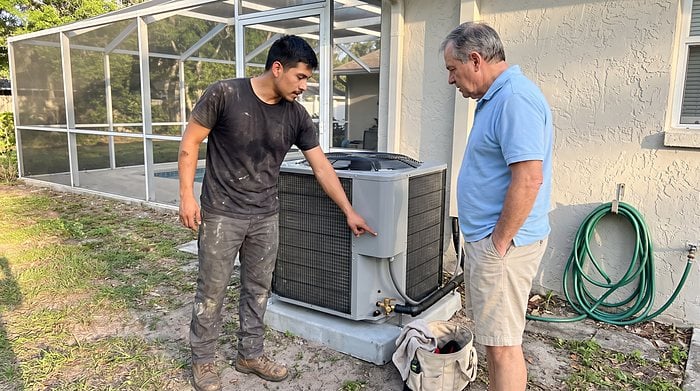
Yes, an older air conditioner can pass a Florida 4-point inspection. It needs to work, drain cleanly and have a recent service date. The inspector writes down the system's age, but the form grades its condition. Some insurers set their own age rules, so check with your agent.
Say you're insuring an older Winter Park home with a 17-year-old system. At Jormechanical Air in Orlando, we'd start with what the form asks. Knowing that helps you get the unit ready, and it can spare you a replacement you never needed.
How a Florida 4-Point Inspection Works

A 4-point inspection is a short report on four parts of a home. They are the roof, the wiring, the plumbing and the heating and cooling system. Insurers use it to judge the risk of fire, water damage and failure in older homes.
Citizens Property Insurance, Florida's state-backed insurer, requires one on homes more than 20 years old. That covers property owner, dwelling and mobile home applications. Citizens lowered the age from 30 years for policies that took effect on or after February 1, 2022.
Private insurers can ask for one too. Your agent can tell you if your policy needs a 4-point inspection and how old the home must be first.
What the Form Asks About Your Air Conditioner
Citizens publishes a sample 4-point form, and its HVAC section is short. Other reports must give at least the same detail to be accepted. So most Florida inspectors cover these points, whichever insurer you use.
- Whether the home has central air and central heat.
- Whether the heating and cooling systems are in good working order.
- The date of the last HVAC service or inspection.
- Hazards, such as a space heater used as the main heat source.
- Whether a wood-burning stove or gas fireplace is present, and whether a pro installed it.
- Any leaks or blockage at the air handler, drain line or drain pan, including water damage.
- The system's age, the year it was last updated and a photo of its dated plate.
Notice what the list leaves out. There is no efficiency rating and no pass mark tied to age. Citizens defines acceptable condition as each system "working as intended" with no visible hazards or deficiencies. The focus is on condition, not birthday.
Five Things Inspectors Want to See

Two systems of the same age can get very different reports. These five things decide whether an older air conditioner passes cleanly. Miss one, and you may get a deficiency note, questions from the insurer or a request for repairs.
Steady Cooling on Inspection Day
The inspector runs the system to see that it works. A unit that is off, blowing warm air or turning on and off too often can't be marked in good working order. Run it the day before, put a fresh battery in the thermostat and fix any known problems first.
A Dry Drain Pan and Air Handler
Rust trails, a full pan or stained drywall beside the indoor unit all end up on the report. Flush the drain line and deal with old water stains before the visit, so the inspector finds a dry closet.
Readable Manufacturer's Plates
Inspectors photograph the dated plate to record the system's age. A faded, painted or blocked plate leaves the age unknown. In fact, that raises more questions than an honest 18-year date. Move stored items away from both units so the plates are easy to see.
Proof of Recent Service
A recent visit with a dated record shows the system has been cared for. So keep the invoice handy, because a blank service date on an older system gives the insurer one more reason to look closer.
Clear, Safe Space Around the Equipment
Inspectors note hazards near the equipment, such as damaged wiring or a missing shutoff switch. These count against the home at any system age. Fixing them usually costs much less than a new unit.
Condition carries the report. An older system that runs well, drains properly, shows its age plainly and has a recent service record gives the inspector little to flag. Most problems come from neglect you can spot and fix well before inspection day.
Should You Replace an Older System First?
When an agent mentions a 4-point inspection, many homeowners assume an older unit must go. If the system is worn out, a replacement may be the right call. For a unit that works, it is rarely the first step.
A rushed replacement can backfire. The form does not grade age, so a new system may fix nothing the inspector would have flagged. A unit put in without a permit, or with a leaking drain, can even add new problems. A tune-up might have answered every question on the form.
Ask your agent how the insurer treats system age. If they set a limit, get that answer in writing. Then compare the cost of a new system with any change in your premium. If the system works, a service visit and a clean report may be all you need.
Each Insurer Sets Its Own Age Rules
No single Florida rule covers air conditioner age for insurance. Citizens writes down the age but grades the system on how well it works. Private insurers, however, write their own rules.
Florida law does protect younger roofs. Under section 627.7011(5), an insurer can't refuse or drop a homeowner's policy only because the roof is under 15 years old. Air conditioners get no such protection. Each insurer decides how much system age matters.
Why Age and Condition Drift Apart
ENERGY STAR suggests thinking about replacement once an air conditioner is more than 10 years old. Central Florida also pushes that number hard. Systems here run most of the year, not just one short summer.
That heavy use is why two 15-year-old systems in the Orlando area can be in very different shape. They may even share a brand and size. These four things usually explain the gap.
- Maintenance history, since systems tuned twice a year tend to hold up better.
- Coastal exposure, because salt air eats at outdoor coils faster.
- Sizing, since an oversized system turns on and off too often and wears out parts.
- Drain care, because clogged drains rust pans and damage air handlers.
A system in its late teens with clean coils, a dry pan and a steady service record often has years left. One that skipped maintenance may already show the leaks an inspector notes.
Repair, Service or Replace Before Your 4-Point

Start with the system's condition, not its age. A working system that only needs a drain flush and a service date needs a service call. One with a rusted pan, a weak compressor or repeat refrigerant leaks needs a repair-or-replace decision, and the inspection date adds pressure.
Finish any repair or replacement early. The report should show done work, not a job still waiting on parts or a permit inspection. These four cases point to your next step.
- If it works with no leaks but has no service record, book a tune-up so the form has a recent date.
- When it works but the pan or drain leaks, repair the drain and clean up the water damage.
- For a unit under 15 years old that cools poorly, get a diagnosis and a repair quote first.
- Once a failing unit is over 15 years old, weigh repair against air conditioning replacement.
If replacement makes sense, a permitted installation gives you a new data plate and a fresh service history. The inspector then has nothing to flag on age.
Air Conditioning Service Before Your 4-Point Inspection
A service visit is the easiest way to get an older system ready for its 4-point inspection. Our air conditioning maintenance visit ends with a list of what we checked. That dated record answers the form's service question, and we'll tell you plainly if anything else needs work.
Jormechanical Air is an Orlando company, and you can look up our Florida license, CAC1821345, before you book. The BBB gives us an A+ rating. We serve seven Central Florida counties, so older homes across the area can get ready before the inspector comes.
Need more than a tune-up? You approve the full cost before anyone picks up a tool. Repairs carry our 90-day repair warranty, and labor on a new installation is covered for one year. Call us to book a visit before your inspection date.
Frequently Asked Questions
What happens if my air conditioner fails a 4-point inspection?
Citizens tells agents not to send in applications for homes whose heating, wiring or plumbing doesn't work properly. The same goes for homes with hazards. Its inspections page also says serious problems, like active leaks, should be fixed before you apply. Get the repair done first, then book the inspection.
What photos does a 4-point inspection need?
Citizens' form lists the minimum. The inspector photographs each side of the house, each roof slope, the water heater and the plumbing under the sinks. Photos of the open electrical panel and every hazard are required too. For the air conditioner, the form asks for photos of the equipment.
Who can complete a 4-point inspection in Florida?
Citizens' form must be signed by a Florida-licensed pro whose license can be checked. That can be a home inspector, a building code inspector, or a general, building or residential contractor. A trade pro, like an air conditioning contractor, may sign only the part for their own trade.
Does a window unit count as central air on a 4-point inspection?
Citizens' form asks whether the home has central air conditioning. Window units fall outside that question, and insurers treat them in different ways. If window units are your only cooling, ask your agent how your insurer will handle them before the inspection.
Is a 4-point inspection the same as a home inspection?
No. The 4-point is a narrow insurance report that helps an insurer decide whether to cover the home. Citizens' form says it is not a promise about how well, or how long, any system will last. Buyers who want the whole house checked book a full home inspection too.